catalytic activity:ATP + a protein = ADP + a phosphoprotein.,disease:Defects in EIF2AK3 are the cause of Wolcott-Rallison syndrome (WRS) [MIM:226980]; also known as multiple epiphyseal dysplasia with early-onset diabetes mellitus. WRS is a rare autosomal recessive disorder, characterized by permanent neonatal or early infancy insulin-dependent diabetes and, at a later age, epiphyseal dysplasia, osteoporosis, growth retardation and other multisystem manifestations, such as hepatic and renal dysfunctions, mental retardation and cardiovascular abnormalities.,domain:The lumenal domain senses perturbations in protein folding in the ER, probably through reversible interaction with HSPA5/BIP.,enzyme regulation:Perturbation in protein folding in the endoplasmic reticulum (ER) promotes reversible dissociation from HSPA5/BIP and oligomerization, resulting in transautophosphorylation and kinase activity induction.,function:Phosphorylates the alpha subunit of eukaryotic translation-initiation factor 2 (EIF2), leading to its inactivation and thus to a rapid reduction of translational initiation and repression of global protein synthesis. Serves as a critical effector of unfolded protein response (UPR)-induced G1 growth arrest due to the loss of cyclin D1.,induction:By ER stress.,PTM:Autophosphorylated.,PTM:N-glycosylated.,similarity:Belongs to the protein kinase superfamily.,similarity:Belongs to the protein kinase superfamily. Ser/Thr protein kinase family. GCN2 subfamily.,similarity:Contains 1 protein kinase domain.,subunit:Forms dimers with HSPA5/BIP in resting cells. Oligomerizes in ER-stressed cells. Interacts with DNAJC3.,tissue specificity:Ubiquitous. A high level expression is seen in secretory tissues.,
Endoplasmic reticulum membrane; Single-pass type I membrane protein.
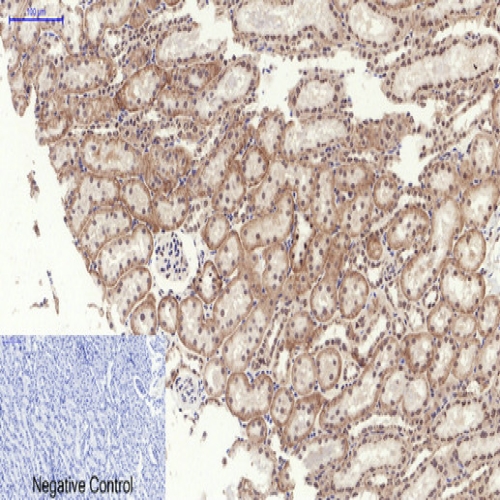
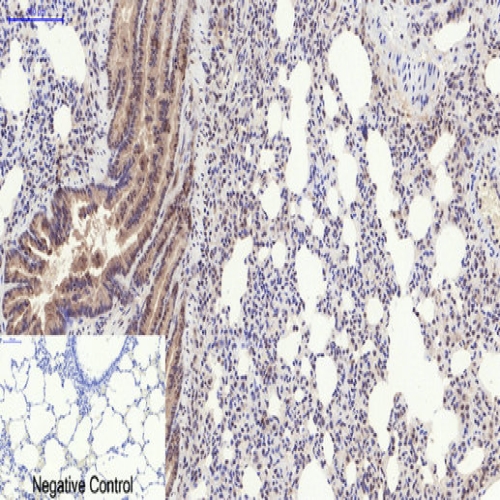
Ubiquitous. A high level expression is seen in secretory tissues.



 下载说明书


